Sunday, February 21, 2010

The Temptation, Kings, Nuns and Priests


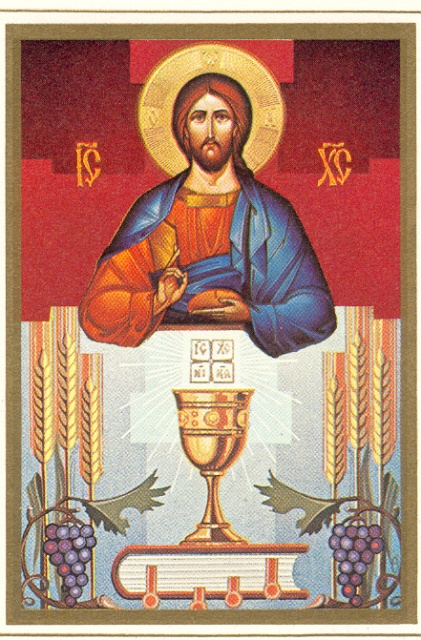
The Gospel reading for the first Sunday of Lent is the temptation of Christ in the desert according to Luke.

Christ is tempted in three ways: through his physical desires (hunger for food), through his eyes (being shown all the glory of the kingdoms of the world), and through the temptation to pride (to stage a magnificent stunt that would win him fame throughout the nation).

This threefold temptation of Christ corresponds to St. John’s warning about the “lust of the flesh, lust of the eyes, and the pride of life” in 1 John 2:15. This threefold categorization has been known in the Church as the “threefold concupiscence,” the unholy Trinity of temptation.

Eve was tempted in the same way. She saw that the fruit was “good for food, pleasing to the eye, and to be desired to make one wise.” “Good for food” is lust of the flesh. “Pleasing to the eye” is lust of the eye. “Desired to make one wise” is a temptation to pride—Eve wants to be wise like God.

Thousands of years later, the king of Israel was commanded by Moses to restrain himself from the temptations of the threefold concupiscence. Deut 17:16-17 forbids the Israelite king from multiplying horses (military might), women (sensual pleasure), and gold/silver (greed/avarice) for himself. These three items correspond to lust of the flesh (women), lust of the eyes (gold), and pride (self-aggrandizing military build-up).

First Kings 10–11 describe how, in his latter years, Solomon, the first Son of David to sit on his father’s throne and a kind of “New Adam” figure in the biblical story line, egregiously fell prey to the threefold concupiscence by multiplying for himself everything Deuteronomy 17 forbids.

In today’s Gospel, we see Jesus, the New Adam, overcoming the threefold concupiscence, and so undoing the sin of Eve, and overcoming the failings of the first Son of David, Solomon. “One greater than Solomon is here” (Luke 11:31).

All Christians share in Christ’s royal anointing and therefore must take steps to overcome lust, avarice, and pride. In particular, in the Catholic tradition, those who enter the religious life take vows of poverty, chastity, and obedience. These vows are radicalized ways to mortify the threefold concupiscence: lust of the flesh (chastity), lust of the eyes (poverty), and pride (obedience). We should view these “evangelical counsels” as means toward a profound conformity to Christ and his power to overcome temptation. Even Catholic diocesan clergy, who do not take formal vows of poverty, chastity, and obedience, nonetheless de facto commit themselves to this lifestyle. It seems fitting that they should, since they are in a sense the viceroys of the New Israel (Gal 6:16), and therefore should commit themselves more radically to the self-denials required of anyone who would rule over the people of God (Deut 17:16-17).

Saturday, February 20, 2010

Back from St. Michael's Parish Houston


While Brant, Michael, and Dr. Hahn are partying in Lubbock, I've been down to Houston to a wonderful parish there, St. Michaels. I gave my conversion story on Thursday night, and spoke to a women's retreat on Friday morning about the Cross as both a priestly and nuptial act on the part of Jesus the Christ. I can't say enough good things about the people and hospitality at St. Michael's parish. I think we all had a great time.

The talks I gave, although in different versions, are available on CD at www.catholic-productions.com.

Thursday, February 04, 2010

Does Hebrews Envision a New Ministerial Priesthood?


Since Pope Benedict has declared this the "Year for Priests," and since I am now teaching at a Catholic seminary, I've been doing some thinking and writing about the origins of the ministerial priesthood. 
In the course of this research, I went back to the council of Trent's decree on the ministerial priesthood, and found that in key text, the Council rooted its teaching on the institution of the ministerial priesthood in a text from the epistle to the Hebrews:
"Sacrifice and priesthood are so united by the ordinance of God that both have existed in every law. Since, therefore, in the New Testament the Catholic Church has received from the institution of the Lord the holy, visible sacrifice of the Eucharist, it must also be confessed that there is in the Church a new visible and external priesthood (canon 1), into which the old has been translated (Heb 7:12). Moreover, that this was instituted by that same Lord and Savior (canon 3), and that to the apostles and their successors in the priesthood was handed down the power of consecrating, of offering and administering His body and blood, and also of forgiving and retaining sins, the Sacred Scriptures sho and the Church has always taught. 
(canon 1)." (Council of Trent, Session XXIII)

Several things are interesting about this text, not least of which is the language used to describe what is now commonly called the 'ministerial' priesthood. For one thing, Trent refers to this as the "visible and external priesthood," which presents a contrast to the priesthood of all the baptized, which I presume would be an "invisible and interior" priesthood. Moreover, Trent also speaks of the "translation" of the old priesthood into the new. This is intriguing language, perhaps not one would expect when thinking of the establishment of a new priesthood. 

Finally, it is interesting that Trent focus on Hebrews 7:12, since the context of that seems to me to suggest both (1) that Jesus is a priest after the order of Melchizedek, and (2) that there has been "a change in the priesthood," not a dissolution of the priesthood:

11 Now if perfection had been attainable through the Levit'ical priesthood (for under it the people received the law), what further need would there have been for
another priest to arise after the order of Melchiz'edek, rather than one named after the order of Aaron? 12 For when there is a change in the priesthood, there is 
necessarily a change in the law as well. 13 For the one of whom these things are spoken belonged to another tribe, from which no one has ever served at the altar. 14 For it is evident that our Lord was descended from Judah, and in connection with that tribe Moses said nothing about priests. (Heb 7:11-14)

Notice also that the context is specifically priestly ministers--i.e., those who "serve at the altar" (Heb 7:13), which was something that was never done by all Israelites, even though they were all "a kingdom of priests" (cf. Exod 19:5-6). What is fascinating about this emphasis on service "at the altar" in combination with a "change in the priesthood," is that Heb 7:13 is not the last reference to an altar. Rather, in Hebrews 13 we find the following:

"
We have an altar from which those who serve in the tent have no right to eat." (Heb 13: 10)

What "altar" is the author referring to? It seems clear to me that  is a reference to the eucharistic sacrifice, from which Christians may eat, but not the levitical priests in the Jerusalem Temple. If right, this is highly significant: if Hebrews sees the Eucharistic table as an "altar" of sacrifice, one would be hard pressed to deny (especially in a first-century context) that the author also saw the Christian ministers of the altar as priestly figures. This becomes suggestive when we recall that the context of this statement is surrounded by an inclusio focused on obeying the Christian "leaders," who are distinct from the lay faithful (Heb 13:7, 17, inclusio). 

In sum, at first glance, it seems to me that it is precisely in Hebrews that we find some of the most intriguing references to a new priesthood, centered on the new altar of the eucharistic sacrifice. Of course, unlike the Levitical sacrifice, the eucharistic banquet would be an
unbloody sacrifice of bread and wine, but  that is precisely what Melchizedek offers in Gen 14:18, and why he is appropriate type for Jesus' own priesthood and the priestly leaders of the new covenant.

Year of the Priest: Priesthood in the OT (audio)


OK, we're going to try this again.

A couple of days ago I posted a link to some talks on the priesthood in the OT from a Catholic perspective, but the link didn't work.

The final link is now (theoretically) up and running, so click on the title of this post if you want to listen.

These talks were part of Adult Faith Formation for the City of Steubenville, an effort of all the city's parishes.

Wednesday, January 06, 2010

On the Essential Unity of the Old and New Testaments


Merry Christmas to everyone out there.
Over the Christmas break, I've been reading a biography of the twentieth-century theologian, Henri de Lubac (1896-1991), by Rudolf Voderholzer, entitled, Meet Heri de Lubac: His Life and Work (Ignatius Press, 2008). 
One of the most interesting parts of the book is when it recounts de Lubac's composition of his multi-volume masterpiece, Medieval Exegesis (3 vols. Eerdmans, 1998, 2000, 2008). In preparation for this work, de Lubac worked through all 217 volumes of Migne's Latin Church Fathers and all 162 volumes of the Greek Fathers, copying down all of the relevant passages on the doctrine of Scripture on slips of paper! What I found fascinating about this recollection was not just the thoroughness of his research (who does this anymore besides Dale Allison?), but, in the course of such reading, his overarching discovery:
"Along the way I became more and more strongly aware of the essential nature of the extraordinary connection, always threatened but always maintained or reestablished within the Church, between the two Testaments; I saw it more and more clearly dominating the whole history and the whole doctrine of the Church, from the first century to our own time... I was happy working to do justice in that way to one of the central elements of the Catholic tradition, so grossly unappreciated in modern times and nevertheless still the bearer of promises for renewal." (Henri de Lubac, At the Service of the Church, 83-84, cited in Meet Henri de Lubac, 79)
This is a remarkable claim. After reading through the vast majority of the Fathers, both Greek and Latin, de Lubac found that the issue of "the essential unity" of the Old and New Testaments "dominates" both the "history" and "doctrine" of the Church, from the beginning down to our times. Think about it, and it rings true: 
What was the first council of Jerusalem about? The unity of the Old and New testaments, and whether not requiring circumcision for salvation was an abandonment of the old covenant. How about Irenaeus' clash with Gnosticism? The unity of the Old and New Testaments, and whether the Creator God of the old was the same as the Redeemer of the New.
Indeed, even today, what about the quest for the historical Jesus, especially in its most recent form, which is so focused on Jesus the Jew? At the heart of it, isn't this really about answering the question of continuity between Jesus (who lived according to the Old Testament) and the Church (representing the New)? 
For what it's worth, for years I have suggested to my students (with no actual research or evidence to back it up) that most of the heresies that have plagued the Church over the centuries often seem in some way be tied to a failure to pay adequate attention to the Old Testament. It's vindicating to find someone of de Lubac's erudition (personally, I've only had the time to read 161 volumes of Migne's Greek fathers;) confirming the basic idea that the unity of the Old and New Testaments is "always being threatened" by various voices but "always being maintained or reestablished within the Church." In our century, such an affirmation was given an unprecedented visibility at the Second Vatican Council in Dei Verbum 14-15 and even moreso in the 1992 Catechism of the Catholic Church, which devotes three long paragraphs to "the unity of the Old and New Testaments" (CCC 128-130). 
In closing, I also think, but cannot prove, that one of the reason's N. T. Wright's Jesus and the Victory of God (Fortress 1996) was such a popular book was that he integrated the Old Testament prophets into his reconstruction of Jesus' life and aims more thoroughly than any other scholar writing at the time. I can honestly say that for my own part, while writing my dissertation, it was Wright above all who pushed me to actually go back and not just read Second Temple sources, but the Old Testament itself, especially the prophets, in my own attempt to understand the first-century prophet from Nazareth. 


Wednesday, December 02, 2009

A Major New Book on Jesus: Craig Keener's The Historical Jesus of the Gospels


Well, another SBL is come and gone, and I've spent the last week doing what I do every year the week after SBL: being torn apart between reading all the new books I bought and finishing up my semester of teaching work and finals grading.
This year, I have given in to temptation and can't stop reading Craig Keener's new book, The Historical Jesus of the Gospels (Eerdmands, 2009). I am currently about halfway through it, and, if all goes well, plan on doing a series of short posts on certain aspects of this very important new contribution to the historical study of Jesus.
Keener is one of the most learned New Testament scholars writing today, and one of the few historical Jesus scholars who has also penned full length commentaries on The Gospel of Matthew (Eerdmans, 1999) and The Gospel of John (Hendrickson, 2003), of which the latter is arguably the most exhaustive commentary on John penned in the last century or so. For the last few years I've recommended Keener's commentary on John to colleagues not least because the opening chapter on the introduction to John--a chapter which is 330 single spaced pages!--is simply the best introduction to the Gospel I've ever read. (It almost should have been a separate monograph). Anyway, Keener's familiarity with the exegetical issues surrounding the Synoptic and Johannine tradition gives him a special edge and makes his work a unique contribution to the field of historical Jesus research.
With that being said, there are three introductory points that you should know about this new book, The Historical Jesus of the Gospels:
1. Although the book looks formidably long, it is actually extremely concisely written. While it totals out at 831 pages, only 350 of those are actually main text. The rest are endnotes (Why?Why? Why?!!!) appendices, indexes, and an over 100 page bibliography. This makes the book much more accessible for a wide audience than it might appear at first glance.
2. The book is divided into two main parts:
a. Methodology of Jesus Research
b. A 'Reconstruction' of the Life and Aims of Jesus
I'm currently finishing up the methodology section, so I can't say much about Keener's analysis of Jesus' aims, except to say that Keener himself points out that the main contribution of the book is in the method section, where he draws on his unbelievably vast knowledge of ancient Jewish and Greco-Roman literature in order to situate the genre and writing of the Gospels in their historical context.
So far, this methodology section is simple stunning: the chapters on "The Gospels as Biographies," "Luke-Acts as History," "The Gospels' Written Sources," and "the Gospels Oral Sources" are worth the price of the whole book. I have never read in one place such a concise and earth-shattering reevaluation of the assumptions, methods, and sources of Gospel study that is so thoroughly researched and entirely rooted in ancient primary sources, both Greco-Roman and Jewish. Keener strides across the threshold to the door that Richard Bauckham opened in his Jesus and the Eyewitnesses (Eerdmans, 2003), and does so in a way that is clear, concise, unbelievably erudite, and quite convincing, and which does not suffer from some of the weaknesses of Bauckham's case (e.g., the question of inclusio indicators of eyewitness sources.)
I cannot stress the point enough: any scholar or student who works in the historical study of Jesus needs to read carefully and reckon with Keener's arguments about the genre, historiographical characteristics, and oral and literary formation of the Gospels. If all I had were part 1 of this book, I would even go so far as to suggest that Keener's work represents something of a new stage in the historical study of Jesus, since it is the first major work to fully incorporate the advances that have been made into the literary genre of the Gospels as ancient biographies. Other works treat the Gospels like biographies, without fully discussing why (e.g., N. T. Wright, Jesus and the Victory of God), while other works note that the Gospels are biographies, but end up treating the Gospel material exactly like the form-critics who denied the biographical character of the Gospels (e.g., James Dunn, Jesus Remembered). Keener's work is different. However...
3. ...There's still one last observation, more critical than laudatory. There is a strange weakness in the book, which is frustratingly mis-titled. The title, The Historical Jesus of the Gospels, gives the impression that Keener is going to build his reconstruction of Jesus' words and deeds from all four Gospels, not just the Synoptics. However, this book should have been called The Historical Jesus of the SYNOPTIC Gospels, for the Fourth Gospel is (virtually) nowhere to be found. Indeed, before we even get to page 1, Keener declares that he will abstain from drawing on the Gospel of John, for reasons of (1) length (the book is already too long); (2) previous publication (readers can find his thoughts on John in his commentary); and (3) avoiding controversy ("there are enough issues of controversy involved in the present discussion that it seemed superfluous to add another one" Keener, "Introduction," p. xxiv).
Although I can sympathize with these points, in the final analysis, they disappoint, for several reasons.First, the issue of length could have easily been solved by eliminating the 100 page bibliography. I'd have preferred 100 pages on Jesus and the Gospel of John from one of the foremost commentators on the Fourth Gospel rather than yet another bibliography. (For that matter, is there any real difference between an 800 page book and a 900 pager?)
Second, Keener himself states that the whole reason he wrote this book is because he overheard someone comment at a conference that "If you want those in the historical Jesus field to read your work, you don't stick it in the commentaries." Keener, p. xxix). In other words, the point of the book is to bring the results of his commentary work into the discussion of the historical Jesus. Why should this goal apply to the Synoptics and not to John? In my opinion, this was a real missed opportunity to have an expert in John allow his expertise to have a potential impact on the field of Jesus research.
Third and finally, while I can sympathize with the desire to avoid controversy and to pick battles that you can actually win, there is a serious methodological problem with using all of the first-century biographies written within the living memory of Jesus' disciples except John. At the end of the day, it is arbitrary, and by definition skews the overall reconstruction. What historical or methodological justification is there for eliminating an entire Gospel from your reconstruction, one which Keener himself regards as a first-century historical biography, written by an eyewitness? Why do this at a time when so many scholars (Keener among them) have recognized the historical value of John's Gospel on a number of points? (e.g., The SBL John, Jesus, and History Group) Again, it would have been very interesting to see how someone who knows John as well as Keener would have actually made use of his Gospel in a historical Jesus book.
Anyway, these criticisms aside, in my opinion, Keener's work, The Historical Jesus of the Gospels, looks like it could be one of the most consequential books published on the historical Jesus in over a decade. He is to be commended for stepping out of the field of Gospel commentary writing and making such a momentous contribution to Jesus research.


Sunday, November 29, 2009

Reflections on SBL: Otto gives a stimulating talk on the Pentateuch

Much of the significance of SBL comes in private interaction between scholars outside of the official sessions. In fact, between the meetings we had with colleagues, it was especially hard this year to take in many of the sessions. One I did get to attend featured Eckart Otto, a very famous "elder statesmen" of Pentateuchal studies. Otto gave an impassioned appeal for greater attention to the Pentateuchal narrative when interpreting Pentateuchal law. He argued that the narrative has an intentional "hermeneutical function" that guides the reader into understanding the relative significance of the various codes of law present in the Pentateuch.

I resonated with Otto's basic message. After all, when Paul says that the "law was added because of transgression" (Galatians 3:19) or Jesus says that "Moses permitted ... for the hardness of your hearts," I think both are examples of allowing the Pentateuchal narrative to supply a hermeneutical (interpretive) function. To wit, both Jesus and Paul observe that some of the law of the Pentateuch was given in response to, or in consideration of, the failures of the people of Israel to live up to God's highest ideals for them. Therefore, not all of these laws are universally binding moral norms.

In any event, I believe it will be a good thing for Pentateuchal studies if more scholars heed Otto's call for greater attention to the narrative context of law.

Tuesday, November 24, 2009

Back in Steubenville


SBL is over, Brant is back on the other side of Lake Pontchartrain, and I'm back in Steubenville (see pic at left--Steubenville in its glory days). I imagine we'll have a little material to post about the conference in the next few days. However, today is still a class day. Thanksgiving Break doesn't start until tomorrow.

Sorry, no pics of famous bible scholars from the actual conference. Neither Brant nor I brought a camera.

Sunday, November 22, 2009

Having Fun in New Orleans


Well, Brant and I are here in New Orleans enjoying the Society of Biblical Literature Annual Meeting. This morning we went to mass with a bunch of colleagues at St. Louis Cathedral (picture at right), on the Feast of Christ the King. The church and the liturgy were beautiful, and the homily was solid. What a blessing. Afterwards we tried to get breakfast at the famous Cafe du Monde, but the line was half a block long. We settled for beignets and coffee in a lesser-known but lovely eatery, while a street musician serenaded us with hymns, spirituals, and excerpts of classical pieces on a soprano recorder. Heavenly!

The collegiality has been great. We've caught up with old friends from our Notre Dame days, and colleagues who work in our respective areas of specialization. On the Old Testament side of things, I've been privileged to have great conversations with Michael Lyons, Mark Leuchter, Jefferey Stackert, Matthias Henze, and Richard Averbeck, all top-notch scholars and each a real "Mensch."

Friday, November 20, 2009

Off to New Orleans: SBL 2009


I'm leaving tomorrow for the Society of Biblical Literature 2009 Congress in New Orleans. The SBL is the guild organization for North American bible scholars. As I mentioned before, I'll be presenting a paper on the relationship of the manumission laws of "H" (Leviticus) and "D" (Deuteronomy) at the Biblical Law session on Monday afternoon (1pm). Brant's already down there since he lives there, obviously. I'm looking forward to some good Cajun food, a chance to catch up with colleagues, and the opportunity to talk over some ideas with top scholars from around the country. Brant and I will probably both be blogging about the experience, although maybe not till next Wednesday.

Monday, November 16, 2009

Atheists Heap Abuse on Mother Theresa: Scriptural and Theological Reflections


Altruism is difficult for atheists to explain within their worldview. This can be seen in their reaction to the modern icon of altruism, Blessed Teresa of Calcutta.
The famous sociobiologist E. O. Wilson argued that goodness was the result of “lying, pretense, and deceit, including self-deceit, because the actor is most convincing who believes that his performance is real.” He attributed Blessed Teresa’s altruism to self-interest. She was just “in it” just to get to heaven: “Mother Teresa is an extraordinary person but it should not be forgotten that she is secure in the service of Christ and the knowledge of her Church’s immortality.”

Wilson’s comments are mild compared to Christopher Hitchens recent comment during an interview with Dennis Miller (here). I have edited some of Hitchen’s crudity:

"Mother Theresa spent her whole life saying (that what Calcutta needs) is a huge campaign against family planning. I mean, who comes to that conclusion who isn’t a complete fanatic? She took – and I would directly say stole…millions and millions of dollars and spent all the money not on the poor, but on the building of nearly 200 convents in her own name around the world to glorify herself and to continue to spread the doctrine that, as she put it — when she got her absurd Nobel Peace Prize — that the main threat to world peace is abortion and contraception. The woman was a fanatic and a fundamentalist and a fraud, and millions of people are much worse off because of her life, and it’s a shame there is no hell for your b**** to go to."


As offensive and erroneous as Wilson’s and Hitchen’s remarks are, I think there is some benefit to reflecting on them, especially in this month of November as we contemplate the saints, the faithful departed, the final judgment, and the Last Things generally.

First, the venom of Hitchen’s remarks reminds me of the response Jesus received from the Pharisees with regard to his healing ministry. In the face of direct evidence of divine power and obvious goodness (miracles of healing), the Pharisees attribute Jesus’ powers to Satan. Likewise, Hitchens thinks Blessed Teresa is worthy of hell, if there was such a place. Sometimes the Gospels seem distant from us because we cannot relate to the social dynamic in some of the stories. Hitchens helps us close the gap between reader and text by showing us up close the twisted logic that can lead people to consider some of the clearest examples of goodness as evil.

Both Hitchens and the Pharisees are confronted with people who challenge their worldview, people who—according to their Weltanschauung—ought not to exist and do what they do. The reaction is violent revulsion, because nothing is more threatening to a person than to have their entire worldview threatened.

Secondly, Wilson’s attribution of Blessed Teresa’s goodness to self-interest based on her hope in heaven actually sheds light on a fact that has somewhat distressed me. Many of you know that after Bl. Teresa’s death her memoirs revealed that, in fact, she frequently did not have spiritual consolations nor a sense of the assurance of her salvation. She worked for long periods in spiritual dryness. When this information came to light, I was troubled personally, because I could not understand why God would not have granted such a selfless person the spiritual consolations that I felt she deserved.

The story of Job comes to mind. Like Wilson, Satan in the beginning of the Book of Job attributes Job’s goodness to self-interest. “Does Job fear God for nothing?” (Job 1:9). This is the “hermeneutic of suspicion,” the same hermeneutic Wilson and Hitchens employ. No one does good for goodness sake; everyone is “in it” because of something “for them.” Does any one do good only for the sake of good? Which is the same as asking, does anyone serve God for the sake of God alone?

Perhaps this is why God permitted Blessed Teresa to serve without spiritual consolations: to silence the Adversary. Her diaries showed E.O. Wilson to be wrong. Blessed Teresa was not some sanguine simpleton serving God for “pie in the sky by and by.” She was not continually consoled with assurance of heaven. Yet she continued to love both God and neighbor without guarantee of any return for herself. Thus her love was perfected and purified, because it was enabled to be without any self-interest. Her spiritual dryness enabled Blessed Teresa to make a perfect self-offering. God gave Bl. Theresa the opportunity to make a pure self-gift. We ought not to be surprised if at some point in our walk with God, we are given a similar opportunity.

(I originally wrote this post on All Saints Day, but it has taken a while to get it proofread and online.)

Friday, November 06, 2009

Who Are the 144,000 in Revelation 14?

Well, I'm off to the 5th annual Letter & Spirit conference at St. John's Seminary. This year's theme is "Priesthood and Blessing," and I'll be doing a presentation on "The Priestly Identity of the 144,000 in Revelation 14." The conference is a response to Pope Benedict's designation of this year as the "Year for Priests." It's also a lead up for Volume 5 of the Journal Letter & Spirit, which is coming out this week!

If you want the full paper, you'll have to come to the conference. But if you want a taste, I'll be looking at the Old Testament and ancient Jewish background of each the images used to describe the 144,00 in Revelation 14:

Then I looked, and behold, on Mount Zion stood the Lamb, and with him a hundred and forty-four thousand who had his name and his Father’s name written on their foreheads. And I heard a voice from heaven like the sound of loud thunder; the voice I heard was like the sound of kitharists playing on their kitharas, and they sing a new song before the throne and before the four living creatures and before the elders. No one could learn that song except the one-hundred and forty-four thousand who had been ransomed from the earth. It is these who have not defiled themselves with women, for they are virgins; it is these who follow the Lamb wherever he goes; these have been redeemed from mankind as first fruits for God and the Lamb, and in their mouth no lie was found, for they are blameless. (Revelation 14:1-4)


In the paper, I argue that each of the key images used to describe the 144,000 are priestly images:
1. They wear the "name" of God on their foreheads (cf. Exodus 28; Sirach 45);
2. They have the exclusive right to sing the "new song" of the heavenly liturgy with "kitharas" (2 Chronicles 9; 1 Maccabees 4; Antiquities 20)
3. They abstain from sexual relations with women (Exodus 19; Leviticus 15; 1 Samuel 21);
4. They are sacrificial "first-fruits" who have been "ransomed" (Numbers 3)
5. No lie was found in their mouths (Malachi 2, the ideal priest).

It should go without saying that such a paper raises all kinds of questions about the biblical origins of priestly celibacy. But more on that anon; I've got to go catch a plane.

Thursday, October 22, 2009

Pondering Psalm 1 on an Ordinary Day


The Psalm for today, Thursday of the Twenty-Ninth Week of Ordinary Time, is the short and beautiful Psalm 1.

Psalm 1 serves as an introduction to the entire psalter. It is a Psalm of the "wisdom" genre--that means, it has literary ties to the wisdom literature. By introducing the psalter with a wisdom psalm, the sacred author means to suggest that the psalter is, among other things, a book of wisdom. Wisdom was a practical rather than theoretical enterprise for the ancient Israelites. Wisdom was knowing how to live rather than knowing various abstractions. However, the psalter is by and large not didactic--it's not full of instructions, like most wisdom literature. Instead it consists of prayers and songs of praise. How do these compositions teach "wisdom"?

Psalm 1 compares the righteous man to a tree planted by streams of water, which stays green and regularly yields its fruit. In the Near East, water is scarce. Many locations cannot count on rain for moisture. I tree with deep roots to a source of water, that could be counted on to produce fruit, was and is a precious thing.

The point of the analogy is fidelity. The wise, righteous man, in the view of the psalmist, is one who is consistent and faithful, one who can be counted on. It is not necessarily the person with a "flashy" spirituality, who has dramatic spiritual experiences and draws the attention of others. These things are good in themselves, but they can be counterfeit and do not necessarily indicate maturity.

On a rather dull day in the liturgical calendar, during the doldrums of the academic semester, it is good to be reminded that the man blessed in God's eyes is the faithful one, who consistently bears fruit no matter what the "weather" is.

Tuesday, October 20, 2009

O Happy Day: SBL Paper on "H" and "D" Finished


And there is much rejoicing at the Bergsma household because Daddy has finished his "big paper" for the November SBL Conference, entitled "The Manumission Laws: Has the Dependence of H on D been Demonstrated?" Sounds fun, huh? I knew you'd think so. Anyway, now Daddy can play--well, at least after he finishes grading seventy more midterms.

Thursday, October 15, 2009

Do Atheists Really Want a Fair Debate?


I while ago I posted about the aftermath of the New Orleans Word of God conference, and various actions by the New Orleans Secular Humanist Association that could be interpreted as indications that they are not serious about a debate with a well-prepared proponent of a different perspective.

Apparently this is not a unique phenomena within the neo-atheist movement. It now comes to light that Richard Dawkins, über-atheist across the pond, is refusing to debate Stephen Meyer, a philosopher of science who has recently published a major contribution to origins research called Signature in the Cell. This is not the first time Dawkins has refused to debate. Christian apologist D'nesh D'Souza long ago issued a standing invitation to debate with him, but was refused. Eventually Dawkins accepted--but just once, and it was only covered by Al-Jazeera, ensuring that no one in the Western world would see it.

Why won't Dawkins debate Stephen Meyer. He says he won't debate "creationists" because it gives them "respectability" they don't deserve.

Stephen Meyer is not a "creationist," a term commonly reserved for those who believe in a young earth and a literal six-day creation. Dawkins knows this, but is engaging in name-calling.

Secondly, when you trounce someone in a debate, it humiliates them, not lends them respectability. Folks only gain respectability in a debate when they win or at least hold their own.

Therefore, what Dawkins means is, he won't debate Meyer because he thinks Meyer will win the debate or at least do well.

Sunday, October 04, 2009

An Atheist at the Cajun Catholic Bible Conference: The Epilogue


As I posted here before, back in August we had a visit from an officer of the New Orleans Secular Humanist Association to our Word of God conference in Cajun country, who was evidently confused by our advertising campaign. Although we billed the conference as an educational event for Catholics concerning the sacraments of marriage and priesthood, some evidently received the impression that it was going to be a value-neutral free exchange of alternative worldviews. Our friend from NOSHA was disappointed when Michael, Brant, and I began to consistently argue for a Catholic and biblical approach to various human realities. In particular he challenged me to a debate in a NOSHA-sponsored venue on the topic of marriage. I declined, as I am primarily a (unfrozen caveman) bible scholar, not a marriage-and-public-policy guy, but I offered to get him in contact with Brian Brown, one of the leaders of the National Organization for Marriage. Brian immediately jumped on the offer to debate and contacted NOSHA. Unfortunately, NOSHA wanted him to come and debate, but would not pay for any of his expenses, neither travel nor lodging.

For those who don't do public speaking professionally, let me make clear that no one pays their own way to come and speak. If you're serious about having a speaker--especially a nationally-recognized one--you pay expenses plus stipend. Would Richard Dawkins, Sam Harris, Christopher Hitchens, or Daniel Dennett pay their own way to come to Franciscan University to debate with us? That's an easy question to answer.

Everyone can draw their own conclusions about how serious the interest in debate really was.

(For those who don't recognize him, the headshot is everyone's favorite British atheist, Richard Dawkins)

Wednesday, September 30, 2009

Should Christians Abandon B.C./A.D.?


I'd like to add my two cents to the interesting discussion by Bob Cargill and Daniel McClellan about whether Christians should abandon the customary "B.C." (Before Christ) and "A.D." (Anno Domini) dating system and adopt the "B.C.E." (Before the Common Era) and "C.E." (Common Era) in widespread use now in the academy.
Anyone who's ever taught or taken a class in biblical studies, much less published a book or article in the field, will have run into this question: Which dating system to use? And why?
With all due respect to Bob and Daniel, I wholeheartedly disagree with the specific proposal that Christians should abandon the B.C./A.D. system for the sake of following "the scientific community." 
The primary reason is that "B.C.E." and "C.E." are vacuous: they don't mean anything. What actually is the "common era"? Can anyone actually tell me what is "common" about the years 1-the present? And what was it that happened "before the common era" so as to make it, well, 'un-common'? 
It seems to mean the terminological shift is nothing but a rather facile attempt to take a dating system which clearly places the Incarnation at the center of human history and secularize it. But the attempt ultimately fails, since whether you use B.C.E/C.E. or B.C./A.D., the Incarnation is still at the center of the system. There's no other identifiable historical event that marks the transition from one age to the other, whatever one concludes about the chronological controversy regarding exact calendar date of Jesus' birth.  
Second, as a Catholic, I actually believe that all human history does revolve around the Incarnation of Christ. While Bob Cargill may be right that the "use of B.C. and A.D." is not "the central identifier of a person as a christian," historically, the confession of faith in the Incarnation stands at the very heart of the Gospel. As 1 Timothy states: "the mystery of our religion" is that "He was manifested in the flesh" (1 Tim 3:16).   If others find this confession of faith in the Incarnation offensive, then it seems to me that the consistent thing to do would be to create entirely different system, a secular system of dating that is based on some other event--rather than cloaking a Christocentric calendar in secular clothes. 
So, until such a system is created and forced upon me, I will happily continue to use B.C. and A.D., as well as other such unfashionable terms like "Old Testament" and "New Testament," and hope that my respect towards people of different faiths will be judged on other grounds. 

P.S. This is, of course, exactly what Bob said members of the Catholic Church would do ;).

P.P.S.
As a sidenote, it's also worth pointing out the origin of the linguistic inconsistency in the B.C./A.D. dating system: Have you ever wondered why "B.C." derives from English ("Before Christ") and "A.D." from Latin (Anno Domini)? Pick up an old Catholic Bible, and you'll find no such inconsistency: in bygone days, the designation for the age before Christ was abbreviated "A.M." (Anno Mundi)--that is, "In the Year of the World." In this system, the dating was counted from creation to the Incarnation, following the biblical timeline, in a way similar to orthodox Jewish calendars.

Sunday, September 13, 2009

So Ancient Jerusalem Really Was Important!?


In case you missed it, a massive fortification wall from the early/mid-second millennium B.C. was recently discovered in the City of David, the heart of ancient Jerusalem.

Why is this significant?

Recent decades have seen the rise of the "minimalist" school of ancient Israelite history. Several important scholars have argued that, although the Bible portrays Jerusalem as an important fortress city already from the time of Joshua, in fact it was a relatively small and unimportant site until, say, the reign of Hezekiah.

The full implications of the discovery of this wall will take a while to digest, but this much is clear--it doesn't help the minimalists' case.

Thursday, September 10, 2009

The Papal Encyclicals on the Bible: Does Anybody Ever Read Them?


Sorry I've been quiet for a while; I'm in the midst of adjusting to my new job at Notre Dame Seminary in New Orleans. A new job means new classes, which means new preps, and new work!
Right now, I'm working up a new course on Biblical Methodology, which has been a ton of fun so far. In it, we are currently doing a close reading of the three papal encyclicals on the Bible.
These are:
1. Pope Leo XIII, 
Encyclical Letter On the Study of Sacred Scripture,
Providentissimus Deus, 1893
2. Pope Benedict XV, 
Encyclical Letter Commemorating the Fifteenth Centenary of the Death of St. Jerome,
Spiritus Paraclitus, 1920
3. Pope Pius XII,
Encyclical Letter Promoting Biblical Studies,
Divino Afflante Spiritu, 1943
As I'm reading through these encyclicals again, I'm struck by what a treasure trove of teaching they are on a whole host of issues: inspiration, inerrancy, interpretation, the literal and spiritual senses of Scripture, the role of the Scripture in the spiritual life and mission of the Church, and on and on. 
But I'm also struck as I look around in secondary literature, both Catholic and Protestant, that no one seems to be actually reading these encyclicals and engaging them. This is an odd situation, one that seems to be peculiar to biblical studies. At least in Catholic circles, no moral theologian worth his or her salt would ever presume to speak about, say, the Church's teaching on contraception without reference to Paul VI's Encyclical Letter Of Human Life, Humanae Vitae (1968). Likewise, Catholic philosophers regularly make their students study John Paul II's Encyclical Letter On the Relationship between Faith and Reason, Fides et Ratio (1998), in close detail. 
By contrast, when it comes to introductions to the Bible, including Catholic ones, authors often precede blissfully along as if no detailed papal teachings on Scripture have ever been penned--or at least they mention them only in passing without any detailed analysis. Why? 
So, here's my questions:
If you are a Catholic, have you read any of the papal encyclicals on the Bible? Why or why not?
And if you are not Catholic--in particular, if you are a Protestant biblical scholar--have you ever read the papal encyclicals on the Bible? If not, why not?

P.S.: If actually you want access to these encyclicals on the Bible, you can find them all online at the Vatican website, or, even more handy, in Dean P. Bechard's excellent book, The Scripture Documents: An Anthology of Official Catholic Teachings (Collegeville: Liturgical Press, 2002).

Sunday, September 06, 2009

What do Bible scholars really do?


Some readers of this blog are bible scholars themselves, so they don't ponder the headline question of this post.

Others might. I mean, beside teaching and speaking at conferences, what do bible scholars do with all their time? What are the secret "scholarly" things they do that make them "scholars"?

Unfortunately, the answer is not always too exciting. The technical projects on which we often work, intended for other scholars, are frequently esoteric. It can take a while to explain why they are interesting at all.

Case in point: at the upcoming Society of Biblical Literature conference (the big professional meeting for North American bible scholars) in New Orleans, I'll be giving a paper discussing whether the ancient author of Leviticus 25 was copying from Deuteronomy 15 when he wrote.

Why is this interesting at all? It has to do with how the Pentateuch was written, and how the laws of the Bible developed.

I did my dissertation on Leviticus 25, and have spent a lot of time pouring over both that passage and also Deuteronomy 15, which has a different laws about some of the same topics.

I've never seen any close verbal parallels indicating that there was some copying going on, in one or the other direction, like what we see between the synoptic gospels. (Nonetheless, it seems to be a dominant opinion among those who work in Pentateuchal law that most of Leviticus is reworking Deuteronomy. I've never been able to see it myself, but then again, I've always been the odd man out.)

So I'm going to argue there is no "literary dependence" between these passages.

But I could be wrong. If any of our good readers can find a convincing example of copying between Lev 25 and Deut 15, let me know!